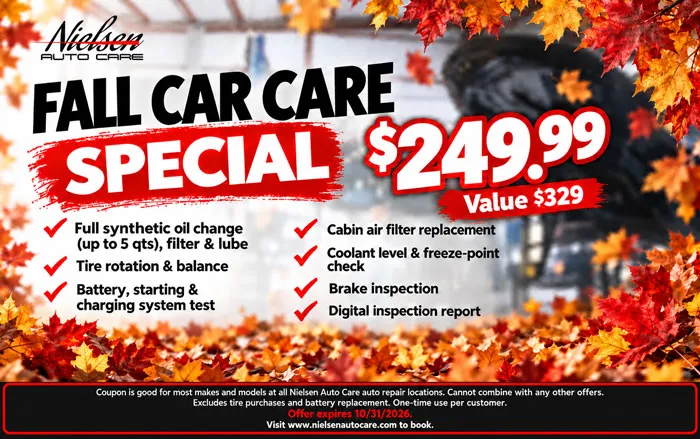
As the vibrant colors of fall sweep across Washington, D.C., Virginia, and Maryland, the shift in temperature can bring a host of challenges for your vehicle’s engine. At Nielsen Auto Care, we understand that the transition from warm summer days to crisp autumn temperatures can take a toll on your car. In this blog post, we’ll explore the common engine issues that can arise during this season and how you can be prepared.
The Impact of Temperature Fluctuations
Fall is characterized by fluctuating temperatures that can range from warm afternoons to chilly mornings. These variations can affect your engine in several ways:
- Condensation Build-Up: With cooler nights and warmer days, condensation can form in your fuel tank and engine. This moisture can lead to rusting and potentially cause issues with fuel efficiency and performance.
- Thickening Engine Oil: As temperatures drop, engine oil can thicken, reducing its ability to effectively lubricate engine components. This can lead to increased friction and wear.
- Cooling System Challenges: The cooling system is crucial in maintaining engine temperature. As temperatures drop, any existing issues with the radiator or thermostat can become more pronounced, leading to overheating or insufficient engine warmth.
Battery Performance
Chilly fall mornings can also impact your vehicle’s battery:
- Reduced Battery Capacity: Cold weather can decrease a battery’s capacity, making it harder for your car to start in the morning.
- Corrosion: The combination of condensation and cooler temperatures can lead to increased corrosion on battery terminals, impeding electrical flow.
At Nielsen Auto Care, we recommend having your battery checked to ensure it’s in good health before the cold of winter sets in.
Fuel System Concerns
The fall season can also affect your vehicle’s fuel system:
- Fuel Line Freezing: In the Washington, D.C., Virginia, and Maryland areas, temperatures can occasionally drop enough to cause water in your fuel lines to freeze, potentially blocking fuel flow.
- Fuel Injector Problems: As temperatures fluctuate, deposits can build up in fuel injectors, affecting performance and efficiency. Regular maintenance can help keep your fuel system in top shape.
Preparing Your Vehicle for Fall
To ensure your vehicle is ready to handle the fall season, consider taking these preventive measures:
- Regular Maintenance: Schedule a comprehensive check-up with our skilled technicians at Nielsen Auto Care. We can assess your engine, battery, and fuel system to ensure they’re functioning optimally.
- Oil Change: Use the appropriate oil viscosity for cooler temperatures to maintain proper lubrication.
- Battery Check: Ensure your battery is charged and free from corrosion to prevent unexpected breakdowns.
Final Thoughts
Fall is a beautiful time in Washington, D.C., Virginia, and Maryland, but it’s essential to be mindful of how temperature changes can affect your vehicle. At Nielsen Auto Care, we’re committed to helping you keep your car running smoothly throughout the season. If you’re experiencing any engine issues or simply want to ensure your vehicle is ready for the cooler months, call or visit us today. Our team is here to provide the expert care your vehicle deserves.